
For many business owners, the three letters V-A-T can bring on a headache. It sounds complicated, intimidating, and like a mountain of paperwork you just don’t have time for.
We get it. But let’s start by reframing it.
Thinking about VAT registration isn’t a sign of trouble; it’s often a sign that your business is growing. It means you’re succeeding, and that’s something to celebrate. The key is to understand what it is, when it applies to you, and how to handle it without the stress.
As your financial guides, we’re here to turn that confusion into clarity. Let’s break it down, step by simple step.
The Big Question: Do I Have to Register for VAT?
The Magic Number: R1 million.
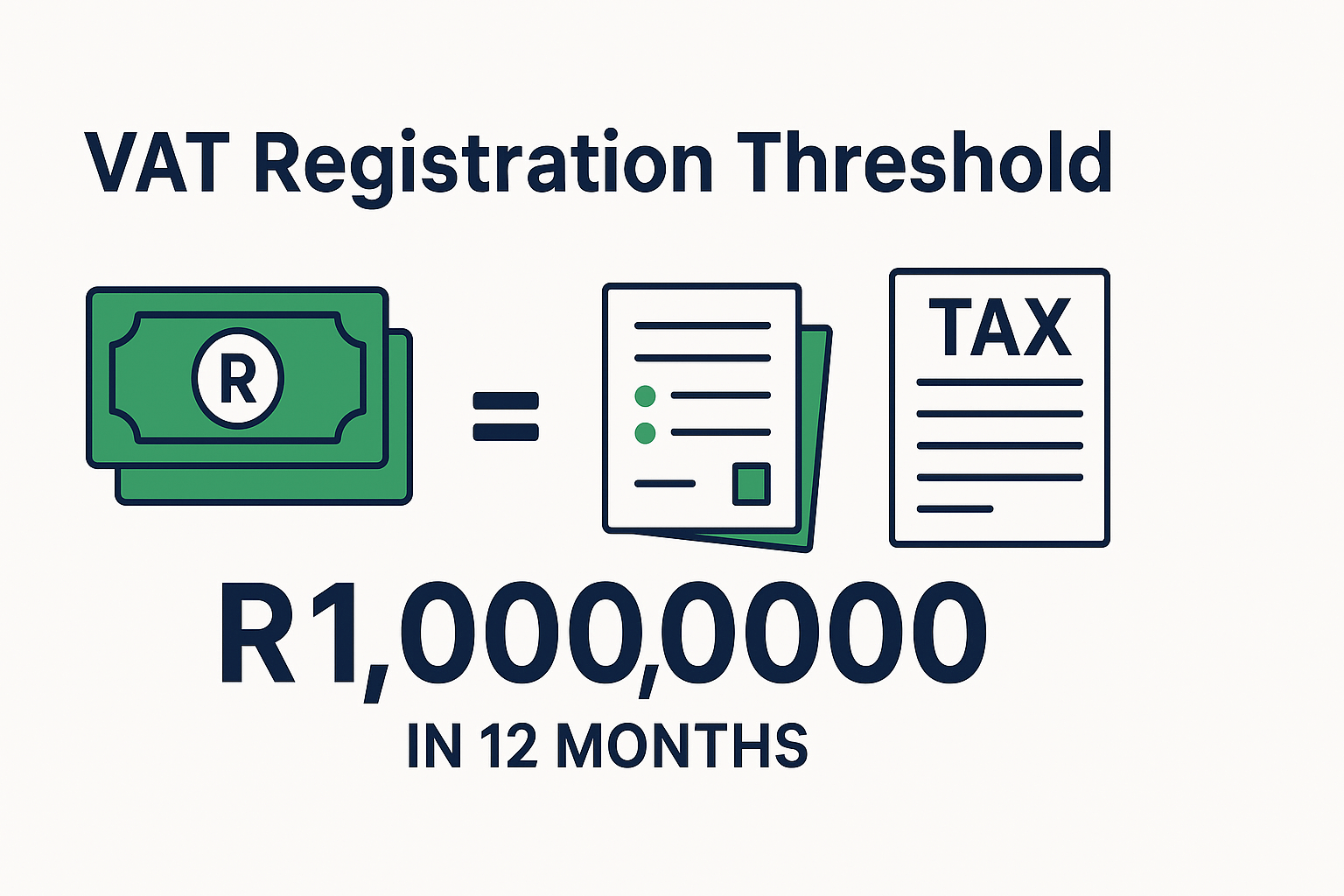
If your total sales have exceeded R1 million in any 12-month period, or if you have a written contract that guarantees you’ll hit this number within a year, then you are legally required to register for VAT.
Think of it less as a complex rule and more as a clear line in the sand. Once you cross it, it’s time to register. It’s important to note this is based on your sales (turnover), not your profit.
What About Registering by Choice? (Voluntary Registration)
What if you haven’t hit the R1 million mark, but you want to register anyway? This is called voluntary registration, and you can choose to do it as long as your sales have been more than R50,000 in the past 12 months.
Why would anyone choose to do this? It’s a strategic decision.
- The Pro: You can claim back the VAT on your business expenses (like laptops, rent, or materials). This can be a big plus for businesses that have high initial setup costs. It can also make your business appear more established to larger corporate clients.
- The Con: It adds to your admin workload and means you have to charge 15% VAT on your sales. If your customers are the general public or small businesses not registered for VAT, this makes your service 15% more expensive for them.
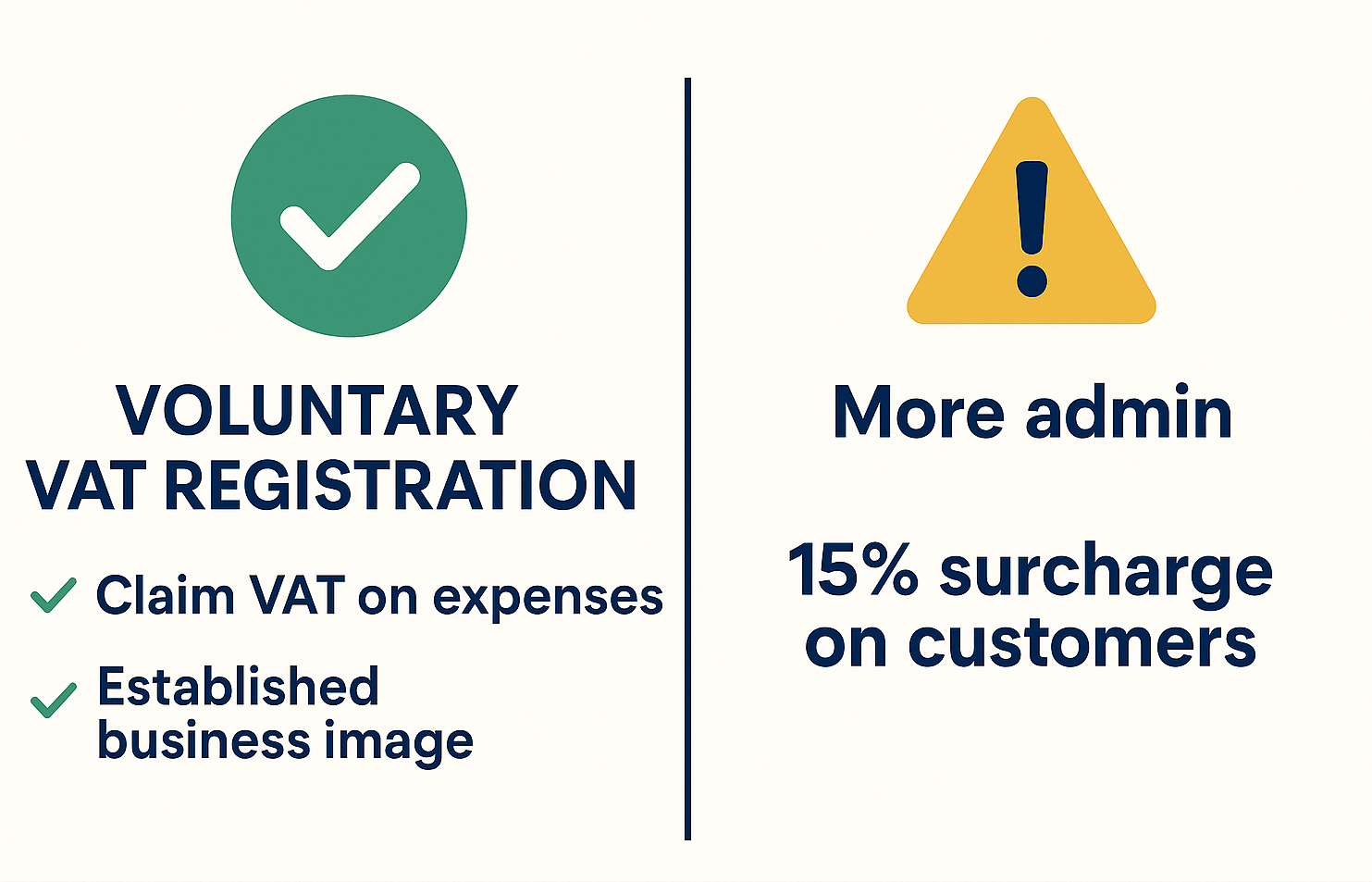
Deciding whether to register voluntarily depends entirely on your business model and your customers. It’s a classic “let’s weigh the options” conversation, one we can certainly help you with.
So, What Does Being a "VAT Vendor" Actually Mean for You?
This is the part that causes the most confusion, but the concept is simpler than you think.
When you become a VAT vendor, you essentially become a tax collector for SARS. It’s not your money; you’re just holding onto it before passing it along.
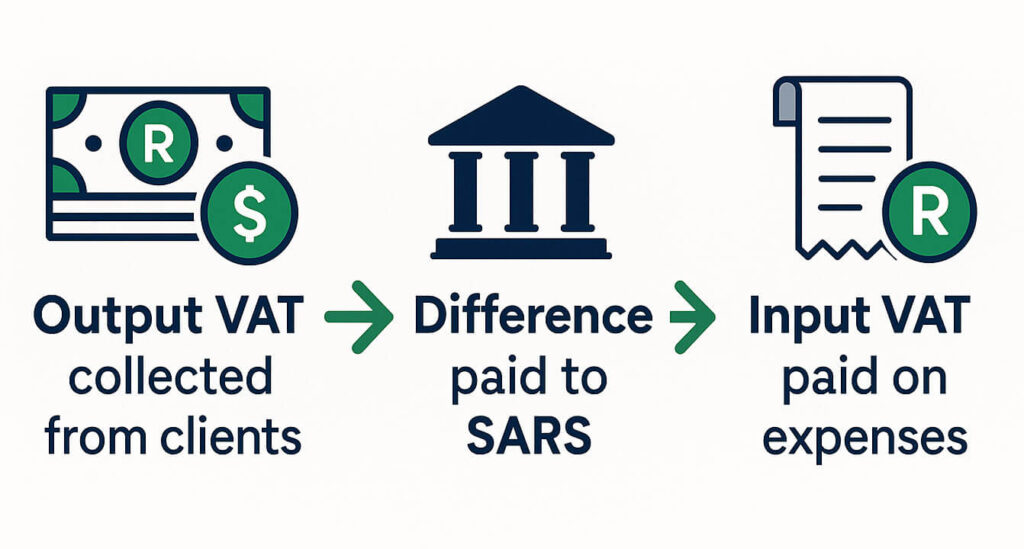
Here’s how it works:
- Output VAT: This is the 15% VAT you add to your invoices when you charge your customers. You collect this on behalf of SARS.
- Input VAT: This is the 15% VAT you pay on your business expenses. Think of your internet bill, your new office chair, or your accountant’s fees. You get to claim this back from SARS.
Every two months (for most businesses), you simply calculate the difference between these two amounts and pay it over to SARS.
Let’s Use a Simple Example:
Imagine you’re a freelance graphic designer.
- You issue an invoice to a client for a new logo for R10,000 + R1,500 (Output VAT) = R11,500. You’ve collected R1,500 for SARS.
- That same month, you buy a new software subscription for R1,000 + R150 (Input VAT) = R1,150. You’ve paid R150 in VAT.
At the end of the VAT period, you owe SARS the difference: R1,500 (collected) – R150 (paid) = R1,350.
That’s it. You’re not losing money; you are simply the middleman in the transaction between your client and SARS.
From Confusion to Confidence
Navigating VAT doesn’t have to be a journey you take alone. While it does involve keeping accurate records and filing returns on time, it should be a smooth, predictable part of your growing business, not a source of stress.
Understanding whether to register, when to register, and what it means is the first step. The next is putting a simple system in place to manage it.
The goal is to get you back to doing what you do best: running the business you love.
Is VAT registration on your horizon?
Are you wondering if it’s the right strategic move for you? Let’s have a simple, jargon-free chat. We’ll help you find the clarity you need to move forward with confidence.